Skip to content
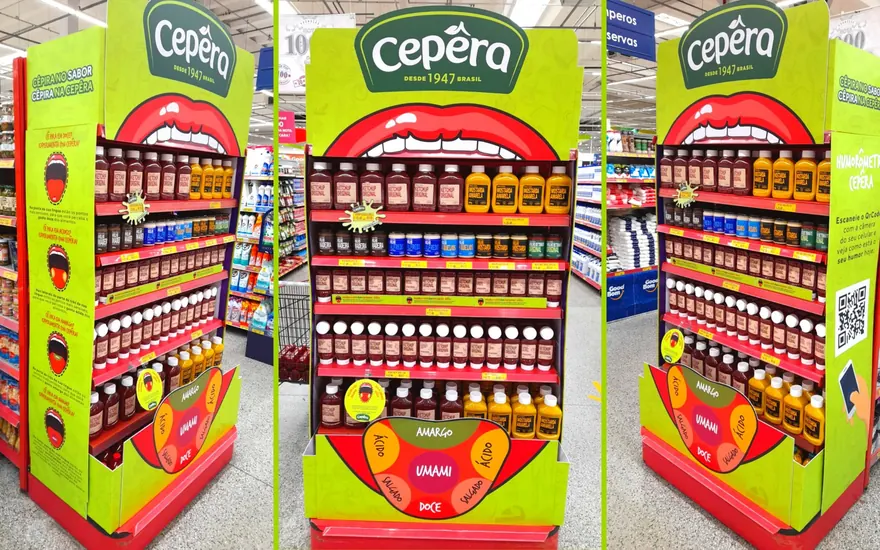
Different types of flavors perceived by the tongue are explained in a fun and interactive way, complete with a "Humorometer" and Instagram filters via QR Code.
More than just a new campaign, Cepêra brings its consumers a true sensory experience at the point of sale, extending to the virtual environment as well.
Since last year, the Flavor Category has been introduced to the public through research on the differences between Taste and Flavor (see more below). And now, with the Flavor Gondola End Cap, which features an illustration of the tongue's flavor map, the main objective is to educate consumers about the different tastes the tongue is capable of perceiving.
All products in the Cepêra Flavors Line have been classified based on the main flavor that the consumer will experience upon tasting, to facilitate and enrich this shopping experience. “With a disruptive concept, vibrant colors, and fun communication, this campaign will also feature an Instagram filter accessible via a QR code located at the end of the shelf. This acts as a playful interaction with consumers, linking 'Humor' with 'Flavor,' increasing social media engagement from within the point of sale with creative messages such as 'I'm feeling acidic today, DM me,'“ explains Ana Carolina Penteado, Marketing Manager at Cepêra.
The first chain to have this experience was the GoodBom Supermarkets chain with 11 stores in the interior of São Paulo, and other chains are already in negotiations for installation. "One point that caught the attention of these chains, in addition to all the interaction with the consumer, was the ease of assembly developed by the agency BTO+, responsible for this action, which was created to adapt to the most varied sizes of end-of-aisle displays, in addition to its installation which can be done in 15 minutes by one or two people," emphasizes the manager.
Besides sweet, salty, sour and bitter
When we talk about tastes, what comes to mind are basically four categories: sweet, salty, sour, and bitter, right? Wrong: according to a study from Oregon State University in the United States, we also have Umami and Starch.
Umami is a word of Japanese origin that means "delicious and pleasant taste" and produces a velvety sensation on the tongue. It is defined as a flavor enhancement, such as those found in soy sauce, cheese, milk, meats, poultry, and seafood, mostly processed.
Starch, on the other hand, refers to the flavor of carbohydrates, such as the taste of starch. This taste is found in bread, potatoes, oats, pasta, and rice.
Now, Japanese scientists are investigating the existence of a seventh taste: Kokumi, "rich taste," which is believed to be responsible for making low-fat foods tastier and more palatable, increasing juiciness, creaminess, and thickness.